


Iran Denies Sending Delegation for U.S. Talks to Pakistan
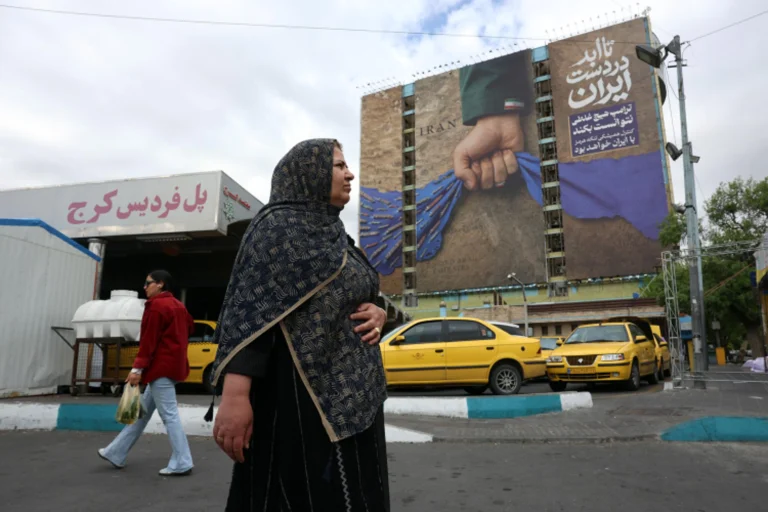
Tehran stressed that any progress in the dialogue will depend on concrete changes in the position of Washington. Photo: EFE.
April 21, 2026 Hour: 3:45 pm
🔗 Comparte este artículo
Iran’s authorities vehemently denied today the reports circulating about the purported dispatch of a delegation to Islamabad for negotiations with the United States.
Official sources from Tehran confirmed on April 21 that no such Iranian mission is present on Pakistani territory, nor has any specific date been established for potential diplomatic encounters with the United States delegation for peace talks.
This definitive refutation comes amidst persistent speculation regarding a new round of dialogue and underscores Iranian firm stance against engaging in talks under duress or perceived non-compliance from Washington.
RELATED: Iran Warns of Decisive Response to Any U.S. Cease-Fire Violation
Tehran has consistently reiterated its refusal to participate in conversations that occur within a framework of pressure or where the United States has failed to uphold its commitments. In this sense, Iranian officials underscored that any substantive progress in dialogue is entirely contingent upon concrete and verifiable changes in Washington’s diplomatic posture. This prerequisite highlights a demand for a more equitable and respectful environment for any potential negotiations.
The absence of such conditions, from Tehran’s perspective, renders the current moment unsuitable for direct talks, regardless of the presence of U.S. representatives in the region.
Mohammad Bagher Ghalibaf, the President of the Iranian Parliament, further solidified this position, stating unequivocally that Iran “will not negotiate under threats”. He also asserted that the period of temporary truce has been strategically utilized by Iran to bolster its response capabilities in preparation for any potential confrontation.
These statements emerge as expectations mounted for a possible new cycle of dialogue between the two countries in the Pakistani capital, especially following the arrival of U.S. representatives there. However, Tehran remains steadfast, insisting that it has not authorized its participation in any such conversations, effectively dismissing the notion of current direct engagement.
For his part, Ismaeil Baghaei, Spokesperson for the Iranian Foreign Ministry, also confirmed the lack of any scheduled future meeting, downplaying the significance of the U.S. delegation’s presence in Pakistan. Baghaei categorized the U.S. delegation’s activities as an issue unrelated to Iran, reinforcing the official line that no direct channels have been opened or are being considered at this time.
Ceasefire Doubts
In this context, Baghaei openly denounced actions such as a maritime blockade and an attack against an Iranian merchant vessel, characterizing these incidents as direct violations of the agreed-upon ceasefire. He further attributed the current heightened tensions in the Persian Gulf and the strategically vital Strait of Hormuz to the ongoing military offensive by the United States and its allies.
According to Baghaei, the region maintained a state of relative stability prior to these events, implying that U.S. actions have been a primary destabilizing force.
Beyond the immediate denial of talks, significant differences continue to persist between the parties on several key issues. These include the Iranian nuclear program, the comprehensive lifting of international sanctions imposed on Iran, the release of frozen Iranian assets held abroad and the compensations demanded by Tehran for various historical and economic grievances. These deep-seated disagreements represent substantial obstacles that would need to be addressed before any meaningful dialogue could realistically take place, regardless of location or format.
Adding to the uncertainty, a temporary two-week ceasefire, previously agreed upon by Iran, the United States and Israel, is rapidly approaching its expiration date. As of April 21, 2026, there are no clear indications or public statements suggesting a possible extension of this crucial agreement. The impending expiration without a renewed commitment further complicates the already strained relationship between Tehran and Washington, raising concerns about potential escalations in a region already prone to volatility.
Author: Laura V. Mor
Source: Agencies